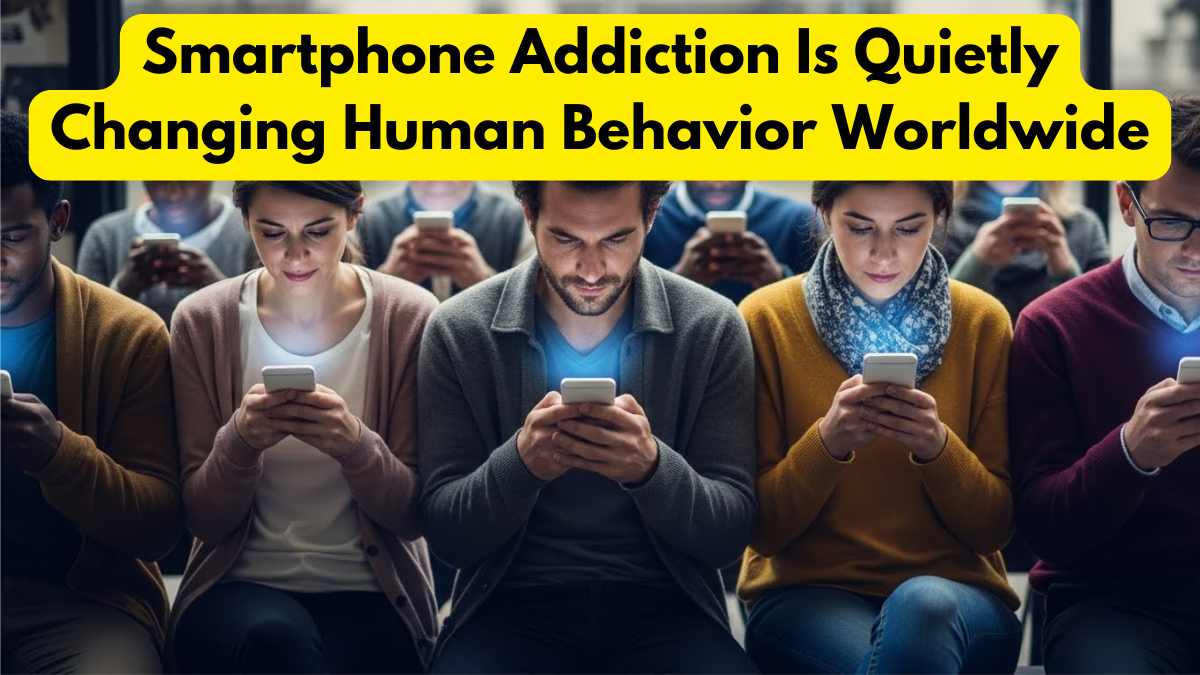
In today’s digital world, smartphone addiction has quietly become one of the most widespread behavioral challenges humanity faces. What initially began as a helpful technological tool has now turned into something people cannot live without. Increasing screen time has drastically changed communication patterns, relationships, sleep quality, productivity levels, and overall lifestyle habits. While smartphones offer convenience, entertainment, and instant access to information, excessive use has begun to impact mental health, emotional balance, and daily functioning. Around the world, researchers, educators, parents, and health professionals are increasingly concerned about how smartphone addiction is transforming human behavior and social interactions.
How Smartphone Addiction Develops and Why It Is Hard to Control
smartphone addiction does not happen overnight. It slowly develops as people rely more on mobile devices for entertainment, work, communication, and social connection. Social media platforms, mobile games, messaging apps, and endless streaming services are designed to capture attention, encouraging longer screen time. Over time, the brain becomes used to constant stimulation and instant gratification, creating dependency. Many people struggle to disconnect because smartphones provide comfort, distraction, and emotional escape. Unfortunately, this ongoing connection significantly affects mental health, increasing anxiety, stress, and even loneliness despite being constantly “connected.”
As smartphone addiction deepens, people begin to check their phones unconsciously, even without notifications. This constant urge leads to distraction, poor focus, and difficulty maintaining real-world conversations. The addiction becomes stronger as screen time grows because dopamine levels in the brain rise with every notification, like, or message. The emotional attachment to digital devices creates behavioral habits that are difficult to break, making smartphone addiction a serious modern-day concern.
Effects of Smartphone Addiction on Screen Time, Lifestyle, and Mental Health
One of the clearest indicators of smartphone addiction is drastically increasing screen time. Many individuals now spend several hours daily scrolling through social media, gaming, or browsing the internet, often without realizing how much time has passed. This excessive screen time interferes with productivity, academic performance, and work efficiency. People become easily distracted, lose focus on priorities, and struggle with time management. Daily routines are disrupted as more time is spent online rather than engaging in physical activities or meaningful real-life interactions.
Worse still, smartphone addiction has a strong connection to declining mental health. Constant comparison on social media, exposure to negative news, cyberbullying, and unrealistic lifestyle portrayals increase anxiety, stress, and depression. Many individuals experience emotional exhaustion, lack of self-esteem, and increased loneliness. Sleep patterns are also affected because blue light and late-night scrolling disturb brain relaxation. Below is a simple table summarizing how smartphone addiction, excessive screen time, and mental health challenges are interconnected:
| Factor | Impact on Daily Life |
|---|---|
| Smartphone Addiction | Dependency, reduced focus, constant checking |
| Screen Time | Lower productivity, disrupted routines |
| Mental Health | Anxiety, stress, emotional imbalance |
| Relationships | Reduced interaction and communication |
| Sleep | Disturbed rest and poor sleep quality |
This table clearly explains how deeply smartphone addiction influences behavior, lifestyle, and mental health worldwide.
Social Relationships and Human Behavior Under the Influence of Smartphone Addiction
smartphone addiction is not only a personal issue; it affects families, friendships, and society as a whole. When people spend excessive screen time on their devices, they often distance themselves emotionally from people around them. Conversations become shorter, attention becomes divided, and face-to-face bonding weakens. Instead of engaging in meaningful discussions, many individuals are more interested in notifications, videos, and online interactions. This change in behavior has deeply affected social skills and emotional intelligence.
Additionally, smartphone addiction affects workplace and educational environments. Students struggle to concentrate during lessons, while employees find it difficult to stay productive. Constant digital interruptions reduce learning ability and professional performance. Over time, these habits damage confidence and motivation, further harming mental health. Families also report emotional distance as children and adults alike become absorbed in digital worlds rather than real life. The rise of smartphone addiction has therefore become more than a technological issue; it is now a cultural and psychological concern influencing human communication patterns.
Can Smartphone Addiction Be Controlled and Screen Time Reduced?
Despite growing challenges, managing smartphone addiction is possible with awareness and discipline. Reducing unnecessary screen time can significantly improve well-being, concentration, and lifestyle quality. Simple strategies can help, such as setting time limits, disabling unnecessary notifications, scheduling phone-free hours, and prioritizing real-world interactions. People can also benefit from engaging in hobbies, exercise, reading, and outdoor activities instead of continuously scrolling. These changes help refresh the mind and support healthier mental health.
Governments, schools, and health organizations worldwide are also raising awareness about smartphone addiction and its effects on mental health. Educational programs encourage responsible device usage, while mental health experts recommend balance rather than complete avoidance. When people learn to control screen time rather than letting it control them, they regain emotional stability, stronger relationships, and better productivity. Ultimately, smartphones are powerful tools, but they must be used wisely to prevent smartphone addiction from shaping the future of human behavior.
Conclusion
The rising concern of smartphone addiction highlights how deeply technology has integrated into human life. Increasing screen time and declining mental health are clear reminders that balance is essential in the digital age. While smartphones bring convenience, connection, and innovation, overuse can negatively reshape behavior, relationships, work efficiency, and emotional stability. By understanding the impact of smartphone addiction, society can take meaningful steps toward healthier digital habits, stronger mental well-being, and more fulfilling real-world interactions.
FAQs
What is smartphone addiction and why is it increasing?
smartphone addiction is excessive dependency on mobile devices, driven by constant notifications, entertainment, and emotional attachment.
How does screen time relate to smartphone addiction?
screen time increases significantly when people overuse digital devices, leading to reduced productivity and unhealthy behavioral habits.
Can smartphone addiction affect mental health?
Yes, smartphone addiction can negatively affect mental health by increasing stress, anxiety, loneliness, and emotional imbalance.
Is it possible to reduce smartphone addiction?
Yes, reducing smartphone addiction is possible through awareness, time control, healthier routines, limited screen time, and stronger real-life engagement.
Click here to learn more