Have you ever wondered why certain faces are universally considered attractive, even across different cultures and backgrounds? A major factor behind this shared preference is symmetry. The idea of why people prefer symmetry in faces has fascinated scientists, psychologists, and artists for decades. It turns out that our brains are naturally drawn to balanced and proportionate features.
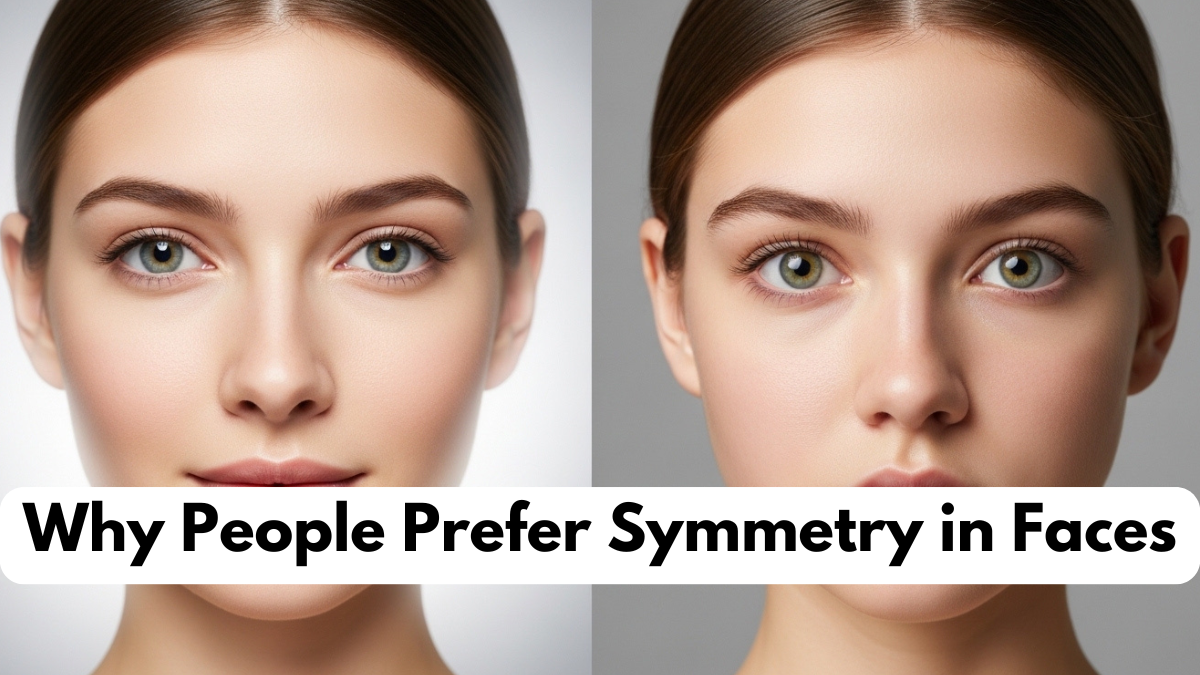
Facial symmetry refers to how evenly the left and right sides of a face match each other. While perfect symmetry is rare, even slight balance can strongly influence beauty perception. This attraction is not random—it is deeply connected to how the human brain processes visual information and evaluates facial balance. Understanding this concept reveals how biology, psychology, and evolution shape our standards of attractiveness.
The Science Behind Facial Symmetry
One of the primary reasons why people prefer symmetry in faces is rooted in biology. Symmetry is often associated with good health and strong genetics. From an evolutionary perspective, humans are naturally inclined to find symmetrical faces attractive because they may signal better physical condition.
This instinct plays a major role in beauty perception, as the brain quickly identifies balanced features as more appealing. Facial balance becomes a visual cue that the brain interprets positively, even without conscious thought.
Key biological influences include:
- Symmetry as an indicator of genetic stability
- Balanced features suggesting overall health
- Natural selection favoring symmetrical traits
- Brain preference for organized patterns
These factors strongly explain why people prefer symmetry in faces, as the brain is wired to recognize and favor balance.
How the Brain Processes Symmetry
The human brain is highly efficient at detecting patterns, and symmetry is one of the easiest patterns to recognize. When we see a symmetrical face, our brain processes it more quickly and smoothly compared to an asymmetrical one.
This ease of processing enhances beauty perception, making symmetrical faces feel more pleasing. In terms of facial balance, the brain prefers images that are simple and predictable, which symmetry provides.
Here is a comparison to understand this better:
| Feature | Symmetrical Face | Asymmetrical Face |
|---|---|---|
| Visual Processing | Fast and efficient | Slower and complex |
| Perceived Attractiveness | High | Moderate to low |
| Facial Balance | Strong | Weak or uneven |
| Emotional Response | Positive | Neutral or mixed |
| Memory Retention | Easier to remember | Less memorable |
This table highlights how the brain’s response contributes to why people prefer symmetry in faces, reinforcing the role of beauty perception.
The Role of Beauty Perception
Beauty perception is not just about physical appearance—it is about how the brain interprets visual harmony. Symmetrical faces create a sense of order and balance, which the brain finds satisfying.
When features like eyes, nose, and lips align evenly, it enhances facial balance, making the face appear more attractive. This balance reduces visual effort, allowing the brain to process the face quickly and positively.
Additionally, symmetry often gives the impression of confidence and stability. These subtle cues influence how we judge attractiveness, further explaining why people prefer symmetry in faces.
Cultural and Social Influences
While biology plays a major role, cultural factors also shape why people prefer symmetry in faces. Media, art, and social standards often emphasize balanced features as ideal.
Over time, repeated exposure to symmetrical faces in advertisements, movies, and social platforms reinforces beauty perception. This exposure strengthens the belief that symmetry equals attractiveness.
Social influences include:
- Media promoting symmetrical beauty standards
- Photography and editing enhancing facial balance
- Cultural ideals emphasizing proportion
- Social validation reinforcing preferences
These influences combine with natural instincts, making symmetry a widely accepted standard of beauty.
Imperfection and Natural Variation
It is important to note that perfect symmetry is extremely rare. In reality, slight asymmetry is natural and can even add uniqueness to a face. However, the overall perception of balance still plays a key role in why people prefer symmetry in faces.
The brain does not require perfect alignment—it simply looks for general facial balance. Even small improvements in symmetry can significantly enhance beauty perception.
This explains why people may still find faces attractive even if they are not perfectly symmetrical. The brain focuses on overall harmony rather than exact precision.
Why Symmetry Feels Visually Pleasing
Symmetry creates a sense of stability and order, which the brain finds comforting. When viewing a symmetrical face, the brain experiences less confusion and more clarity.
This clarity enhances beauty perception, making the face appear more appealing. The concept of facial balance ensures that no single feature dominates, creating a harmonious appearance.
These visual and psychological effects together explain why people prefer symmetry in faces, as the brain naturally gravitates toward balance and simplicity.
Conclusion
In conclusion, the reason why people prefer symmetry in faces is a combination of biological instincts, brain processing, and cultural influence. Through the lens of beauty perception, symmetry represents health, harmony, and visual ease.
The importance of facial balance lies in how it simplifies visual interpretation and creates a positive emotional response. While perfection is not necessary, the presence of balance plays a powerful role in defining attractiveness. Understanding this concept helps explain one of the most fundamental aspects of human perception and beauty.
FAQs
Why is symmetry considered attractive?
Symmetry is associated with health and balance, which positively influences beauty perception.
Do all people prefer symmetrical faces?
Most people show a preference for symmetry, though cultural and personal factors can vary.
What is facial balance?
Facial balance refers to how evenly features are distributed across the face.
Can asymmetrical faces still be attractive?
Yes, slight asymmetry is natural and can still result in strong beauty perception.
Does symmetry guarantee attractiveness?
No, symmetry is just one factor among many that influence attractiveness.
Click here to learn more