In the modern workplace, communication is no longer optional — it is essential. Yet, despite constant exposure to digital communication tools, public speaking anxiety is rising sharply among young professionals. Meetings, presentations, interviews, and conferences demand strong speaking abilities, but many individuals experience intense fear when required to speak in front of others. This growing challenge directly impacts workplace confidence, professional development, and mental well-being. The paradox is clear: while communication channels expand, comfort with face-to-face expression continues to decline.
The rise of public speaking anxiety is closely tied to the digital-first environment. Young professionals grow up texting, emailing, and messaging more than engaging in live conversation. While these platforms strengthen written communication skills, they often fail to build real-time speaking confidence. This imbalance increases emotional stress during presentations, interviews, and leadership roles. As careers become more competitive, the inability to communicate clearly under pressure becomes a serious obstacle to professional success.
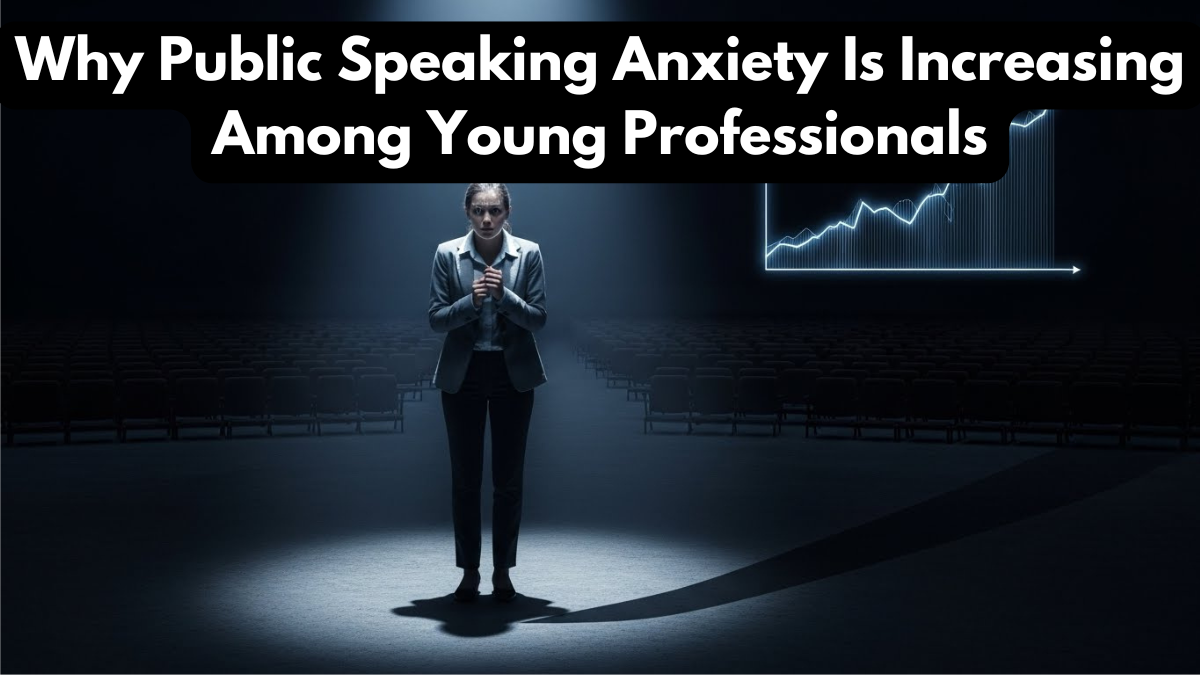
The Psychological Roots of Public Speaking Anxiety
At its core, public speaking anxiety is rooted in fear of judgment, rejection, and failure. The modern workplace amplifies these fears through constant performance evaluation, social media comparison, and unrealistic professional standards. Young professionals often feel their self-worth is tied to their performance, which intensifies stress and undermines workplace confidence.
Biologically, the brain interprets public speaking as a threat, activating the fight-or-flight response. Heart rate increases, palms sweat, breathing becomes shallow, and thoughts race. Without training in emotional regulation and verbal expression, these reactions overwhelm even highly competent individuals. As a result, otherwise strong communication skills collapse under pressure, reinforcing the cycle of public speaking anxiety.
Workplace Culture and Communication Pressure
Modern corporate culture places immense emphasis on presentation, persuasion, and leadership presence. Employees are expected to articulate ideas clearly, motivate teams, and represent their organizations publicly. Yet, few workplaces actively develop speaking abilities. This gap between expectations and training intensifies public speaking anxiety and weakens overall workplace confidence.
Remote work adds another layer of complexity. Virtual meetings remove physical cues and heighten self-awareness, increasing performance stress. Cameras, recordings, and permanent digital documentation of mistakes make professionals hyper-conscious of their speech. Even individuals with strong written communication skills often struggle with spontaneous verbal expression, further fueling anxiety.
Comparison of Confident Speakers vs Anxious Speakers
| Factor | Confident Speakers | Anxious Speakers |
|---|---|---|
| Workplace confidence | High | Low |
| Communication skills | Clear and structured | Inconsistent and hesitant |
| Stress levels | Low to moderate | High and persistent |
| Leadership presence | Strong | Limited |
| Career growth | Accelerated | Slower |
| Handling public speaking anxiety | Well-managed | Overwhelming |
This table demonstrates how unmanaged public speaking anxiety can directly hinder workplace confidence, increase stress, and limit the effectiveness of communication skills.
The Impact on Career Development
Unchecked public speaking anxiety restricts professional growth. Employees avoid leadership roles, decline promotions, and miss opportunities for advancement. Over time, this avoidance damages workplace confidence and creates a self-limiting career trajectory. Despite possessing strong technical abilities, individuals with high speaking anxiety often remain underrecognized.
Furthermore, persistent stress caused by communication challenges affects overall health and job satisfaction. Burnout, reduced motivation, and emotional exhaustion become common. Developing effective communication skills is therefore not just about performance but also about long-term well-being.
Strategies for Overcoming Public Speaking Anxiety
Organizations and individuals are beginning to recognize the importance of addressing public speaking anxiety. Training programs now focus on practical speaking exercises, emotional regulation, and gradual exposure to public communication. Coaching, peer feedback, and supportive leadership environments significantly improve workplace confidence and reduce stress.
Individuals can also take proactive steps by practicing speaking in low-pressure settings, learning breathing techniques, and reframing negative thoughts. Over time, consistent practice transforms fear into familiarity, strengthening both communication skills and professional presence.
Conclusion
The rise of public speaking anxiety among young professionals reflects deeper changes in communication habits, workplace culture, and psychological well-being. While digital platforms have strengthened written communication skills, they have weakened real-time speaking comfort. Addressing this challenge requires intentional training, emotional awareness, and supportive environments that rebuild workplace confidence and reduce stress. By prioritizing effective communication development, organizations and individuals can unlock their full professional potential.
FAQs
Why is public speaking anxiety increasing today?
Public speaking anxiety is increasing due to digital communication dependence, performance pressure, and limited real-world speaking practice.
How does public speaking anxiety affect workplace confidence?
It reduces workplace confidence by creating fear of visibility, limiting participation, and restricting leadership opportunities.
Can communication skills training reduce public speaking anxiety?
Yes. Developing strong communication skills significantly lowers stress and builds lasting workplace confidence.
Is public speaking anxiety a serious career issue?
Absolutely. Unmanaged public speaking anxiety can slow career growth, increase stress, and prevent individuals from reaching leadership positions.
Click here to learn more